
The journalists' and lawyers' unions are supposed to be at the forefront of defending marginalised groups, and women's rights in particular. These are institutions that represent freedom of speech, the rule of law, and civil rights. Yet repeated crises and testimonies reveal a different reality inside both unions.
Where these unions should have offered a model of a more equitable professional environment, testimonies from female lawyers and journalists reveal multiple forms of discrimination and marginalisation: weak representation in decision-making positions, to unequal opportunities for work and career advancement, to harassment and various forms of violence and pressure related to pregnancy and motherhood.
Despite the different nature of each profession, some of these struggles overlap between the two unions, raising a question: how far can institutions that are supposed to defend rights and freedoms guarantee those rights for their own members?
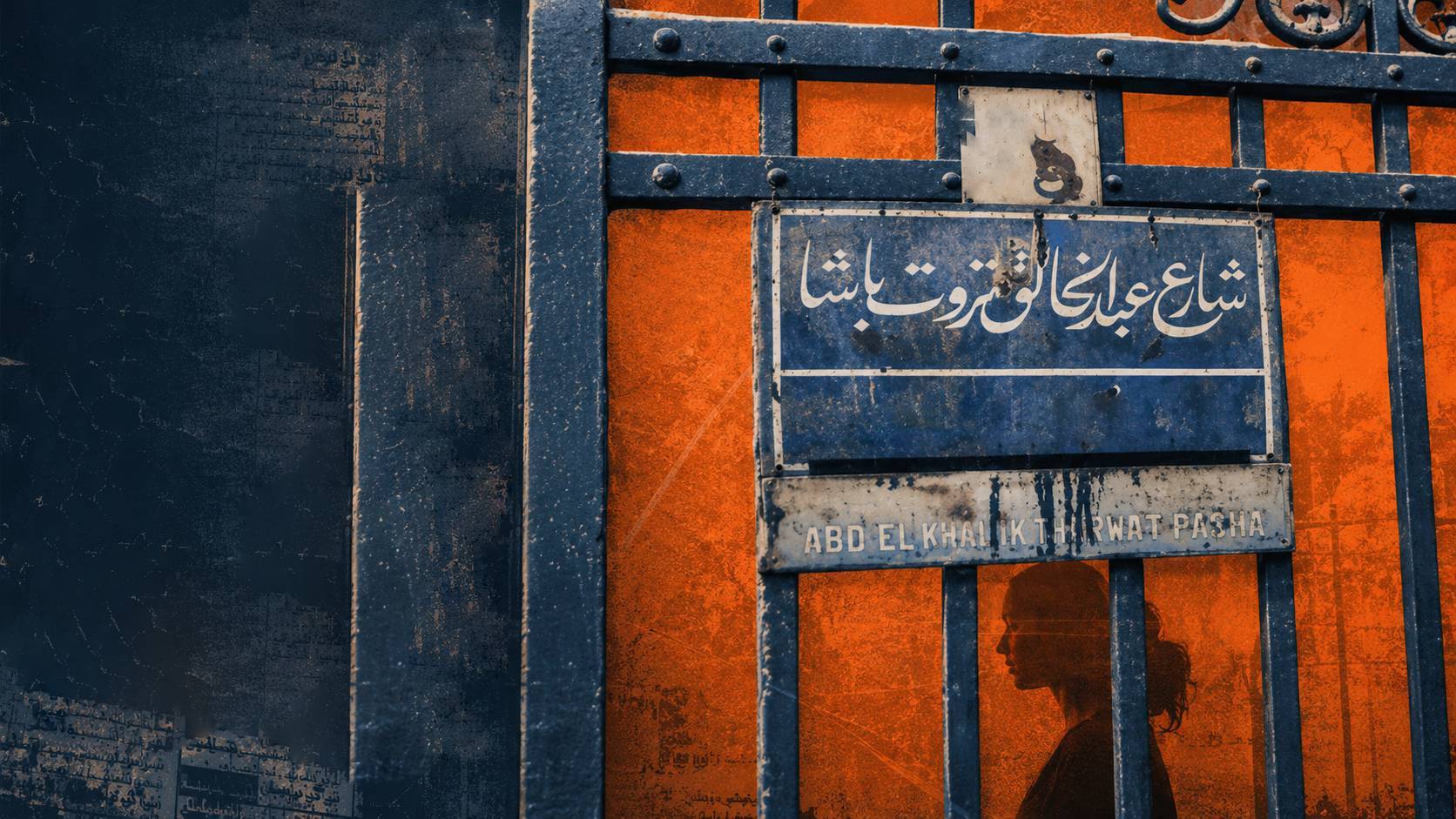
On Abdel Khalek Tharwat Street in central Cairo, the journalists' and lawyers' unions stand side by side – and alongside them, the stories of women facing discrimination, violence, and marginalisation. What women experience in society does not end at the door. It follows them inside the professional institutions themselves.
Loaa Khalaf: a case that reopened the file on discrimination in the lawyers' union
The crisis around lawyer Loaa Khalaf, who was provisionally suspended from practising law by the Sohag branch of the lawyers' union on 11 June, reopened the debate about what female lawyers face inside professional institutions and whether certain union practices carry elements of gender-based discrimination.
Khalaf said in a post on her Facebook page that her suspension was linked to her not wearing the hijab, describing what she experienced as an attempt at "inquisition" under the cover of professional discipline.
A lawyer who attended her hearing and asked not to be named supported her account, saying that the issue of hijab was among the main reasons behind the crisis.
The Sohag branch denied the connection to the hijab in an official statement, saying the suspension was pending the outcome of a disciplinary case. The union attributed its decision to what it described as the lawyer's conduct on social media, along with violations of the legal profession's code and conventions.
Deputy chair Ayman Khalaf said in earlier remarks that the decision was based on a formal complaint from several lawyers citing professional and union misconduct – most notably that Khalaf had announced the opening of her own law office on her personal page, which is not permitted for trainees. He noted that the decision came just 35 days after she was registered with the union on 5 May.
But this case, whatever the truth behind the competing accounts, does not appear to be isolated from the broader struggles female lawyers face inside the profession and the union, according to testimonies gathered by Athar.
"For men only" inside the lawyers' union
Aziza El-Taweel, a lawyer at the Egyptian Initiative for Personal Rights, sees the difficulties facing female lawyers as inseparable from the wider challenges confronting working women, particularly under current economic conditions and persistent forms of discrimination in the labour market, alongside challenges specific to the legal profession and union structures.
Speaking to Athar, she pointed to discriminatory practices including unequal access to union benefits. The union's healthcare system, for instance, allows a male lawyer to add his wife to his coverage. A female lawyer, she says, cannot add her husband, despite paying the same contributions.
These practices are not limited to the general union but appear more prominently in the regional branches, where female lawyers face disparities in accessing some services and opportunities. El-Taweel argues that the union still does not treat women's needs as those of an essential part of the justice system, despite their presence in law offices and courtrooms.
She also points to a lack of basic facilities for women at the general union's headquarters: "The fact that there is no women's bathroom at the union's main building is degrading. It reveals that women's needs are not among the institution's priorities." She added that a temporary curtain in place of a proper facility does not provide even the minimum level of privacy and safety for members and visitors.
Data from Egypt's Central Agency for Public Mobilisation and Statistics (CAPMAS) for 2024 shows that the lawyers' union ranks fourth by total membership at 376,268 – of whom 148,026, or 39.3%, are women, compared with 228,242 men.
The journalists' union has 11,922 members, including 4,092 women (34.3%) and 7,830 men, ranking twelfth by total membership. The figures show that women make up around 40% of the lawyers' union and more than a third of the journalists' union.
From the union to the labour market: other forms of discrimination
Lawyer Aya Hamdi sees the conversation about discrimination against female lawyers as a problem that has persisted since women first entered the profession. Speaking to Athar, she described discriminatory practices in the labour market and inside professional institutions.
Discrimination starts at the earliest stages of a legal career, she says, beginning with pay disparities, then extending to unequal opportunities for career progression inside law firms. Some female lawyers struggle to reach leadership positions such as office director or assistant director, because of stereotypical assumptions that men are better equipped for those responsibilities.
Some are excluded from assignments that require travel outside their governorate, tasks that could provide both income and professional development, on grounds related to their gender. Some employers justify paying female lawyers less by assuming they do not carry financial responsibilities comparable to men's. Hamdi argues that the basis for evaluation should be competence and the nature of the work, not gender.
The discrimination extends to the types of cases assigned. Some firm heads assume women are better suited to family law or administrative tasks, while criminal cases and courtroom litigation are assigned disproportionately to men on the basis that they are "more capable." This distribution, she says, deprives female lawyers of diverse experience and limits their professional growth.
Union activities and services also reflect the pattern. Hamdi notes that many union events, sporting, cultural, and social, are, in her view, oriented towards men. Female lawyers are not given comparable spaces to participate. She points to professional clothing exhibitions that typically cater to male lawyers, despite frequent criticism of female lawyers' attire, with no equivalent support helping them meet professional dress requirements.
She emphasises that addressing this discrimination requires a comprehensive review of the professional culture inside the legal profession and the unions, ensuring female lawyers have equal opportunities in training, work, career advancement, and participation in union governance.
In December 2018, Nazra for Feminist Studies published a study titled "Lawyers Also Have the Right to Justice," examining challenges facing female lawyers. The study noted that the risk of sexual violence – whether experienced or feared – affects some female lawyers' professional choices, with some opting for office work only or avoiding certain courts and prosecution offices because of safety concerns related to their location.
The effects go beyond workplace choice. The study found that these fears limit female lawyers' ability to gain diverse experience, advance professionally, and maintain a presence in the public sphere. It also documented cases of sexual exploitation and harassment within the workplace, particularly against trainees, concluding that these practices also affect women's engagement in union activity and their willingness to run for union positions.
The study documented the case of lawyer Hoda Abdel Wahab, who in March 2017 reported verbal harassment and physical assault by a member of the union council while she was at the union headquarters to renew her membership card. According to the study, Abdel Wahab filed a formal complaint and asked the union chair and council to take action, but Nazra reported that no disciplinary measures were taken against the council member.
The study also highlighted inequality in union services: at the time, female lawyers did not have the same right as their male colleagues to add family members to certain healthcare and pension benefits, a disparity the study called discrimination in rights and obligations between union members.
The lawyers' union was established in the context of Egypt's broader professional union movement. It was preceded by several bodies, including a union for Egyptian lawyers before the mixed courts, another for lawyers before the sharia courts, and then the union for Egyptian lawyers before the national courts, founded on 30 September 1912, from which the current union evolved.
Egyptian women entered the legal profession early. Among the pioneers were Naima Elias El-Ayoubi and Mufida Abdel Rahman, who joined the union after graduating and became the first woman registered before the Court of Cassation, the first woman to join law reform committees, and the first female lawyer in the Arab world to argue cases before military courts.
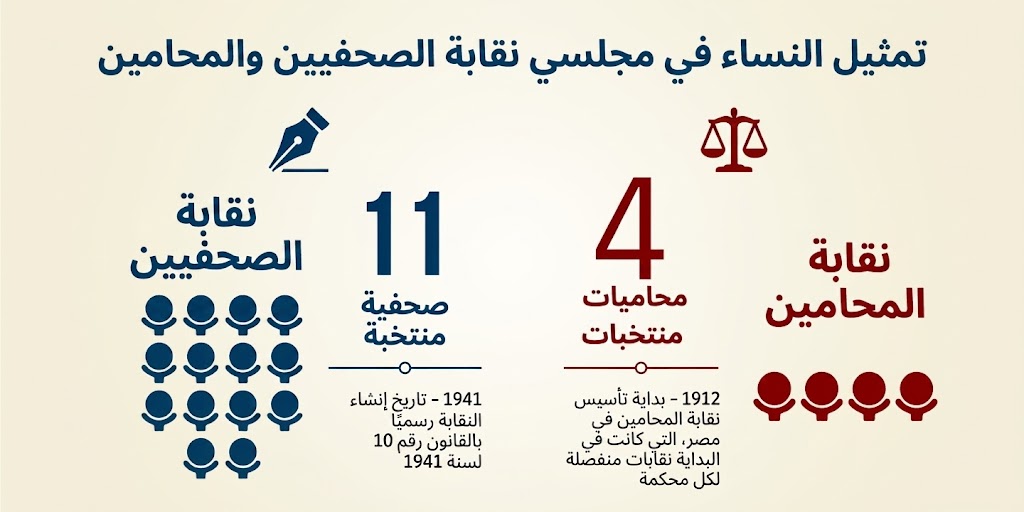
Yet women's presence on the union council has remained extremely limited across the union's century-long history. Between its founding in 1912 and 2018, only four women reached council membership: Zeinab El-Goweini, Tahani El-Gebali, Boshra Asfour, and Fatma El-Zahraa Ghoneim. Women's access to the council remained an exceptional, sporadic occurrence – out of proportion with their growing participation in the profession.
From the lawyers' union to the journalists' union
The struggles women face are not confined to the lawyers' union. They extend to the journalists' union next door on Abdel Khalek Tharwat Street, where testimonies from female journalists reveal similar patterns of discrimination, marginalisation, and violence inside the union and the workplace, not markedly different from what female lawyers describe.
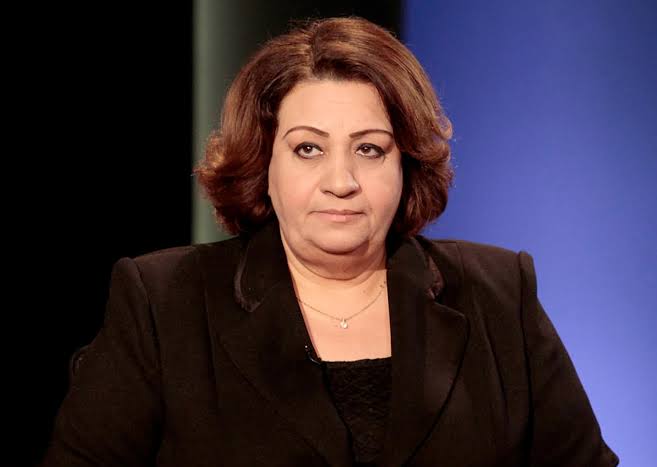
Mona Ezzat, a journalist and writer, member of the journalists' union general assembly and chair of the board of trustees of the Noon Family Association, explains that the journalists' union – despite its nature as a union of opinion, thought, and culture – has not been immune to the influence of the prevailing patriarchal culture. She notes that people in the profession come from diverse social, cultural, and geographical backgrounds, and some carry traditional assumptions about women's roles, which manifest in various forms of gender-based discrimination and violence.
The discrimination, Ezzat says, extends to media institutions themselves. Certain specialisations have historically been associated with men, such as working on the news desk or covering sports, while female journalists were confined to women's issues, children's issues, and social affairs. This division, she argues, limits female journalists' opportunities to work across specialisations and reinforces stereotypes about what suits women and what suits men.
Speaking to Athar, she stresses that women's and family issues should not be treated as separate from the rest of journalism. They intersect with politics, economics, crime, and investigations. She criticises the union's limited role in challenging these patterns, noting that past demands for a women's quota on the union council or a rethinking of editorial specialisation were sometimes met with rejection – not only from male colleagues but from some female journalists who adopted the same position.
Ezzat acknowledges that recent years have seen some positive steps, particularly around the journalists' sixth general conference, with a broader discussion about integrating a gender perspective into union work, developing professional codes of conduct, and updating the journalistic code of honour to include provisions on opposing gender-based discrimination and violence. But she emphasises that these steps are still in their early stages and have not yet translated into binding policies inside media institutions.
She notes that rights related to journalists' reproductive roles were for years among the silenced files. Some female journalists avoided disclosing their pregnancies for fear of losing their jobs or damaging their career prospects, especially in institutions that rely on temporary contracts.
Many did not claim their full entitlements to childcare leave, fearing professional penalties or exclusion from opportunities. Ezzat considers this a form of psychological and economic violence: women bearing professional consequences because of pregnancy and motherhood.
She adds that female journalists carry double burdens compared to their male colleagues. Journalism demands irregular hours, travel, meetings with sources, and continuous professional development, while many female journalists simultaneously bear the responsibilities of care and domestic work, burdens that receive little recognition inside media institutions.
From discrimination to harassment: what female journalists face at work
On the subject of violence and harassment in the workplace, Ezzat says the issue was for years a taboo before the efforts of feminist organisations, activists, and campaigns to break the silence encouraged more female journalists to report the violations they experienced.
She explains that proving cases of harassment inside media institutions remains one of the hardest challenges, due to the frequent absence of direct evidence, pressure or threats faced by some victims, and doubt from colleagues, both male and female, who adopt the prevailing patriarchal attitudes. All of this may deter some women from filing complaints.
She points out that female journalists who do report harassment sometimes face attempts to discredit their accounts or are held responsible for what happened to them, a pattern she sees as reflecting the persistence of patriarchal culture inside the journalistic community, not only outside it.
Ezzat argues that the traditional view of women's roles also affects how some colleagues treat female journalists. Some still view with suspicion the nature of journalistic work that requires late hours, travel, meetings with sources, and writing opinion pieces or covering politics and economics, roles historically associated with men.
She maintains that female journalists continue to face multiple forms of discrimination, stereotyping, and violence in the workplace. The union has, over the past two years, begun taking some steps to open discussion on these issues, but the road remains long in the absence of binding and clear policies ensuring media institutions provide a working environment free from discrimination and violence.
A report published by Neqaba Meter, titled "Female Journalists: An Ongoing Struggle for Gender Justice Inside the Union and Media Institutions," documented that in recent years, female journalists inside and outside the union have stepped up efforts to confront gender-based discrimination and violence in media institutions. Testimonies about violations that were once shared only privately moved into public campaigns and initiatives that shed light on a work environment where women continue to face challenges – both in newsrooms and during field coverage.
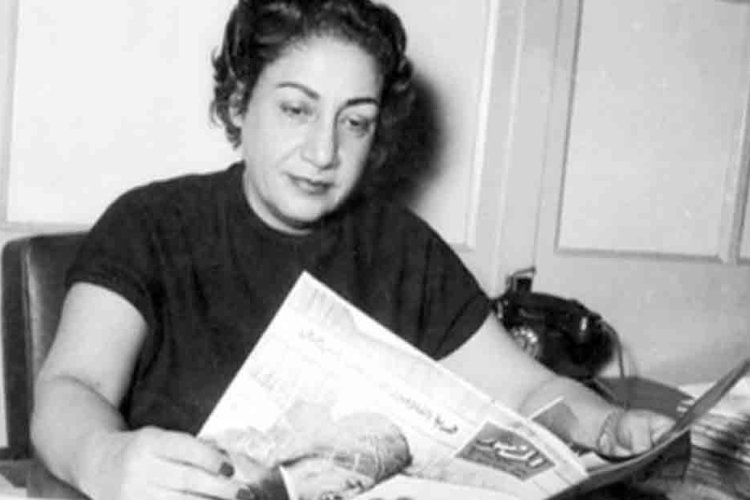
This momentum comes against a backdrop of historically limited representation on the union council. Since the union's founding in 1941, only eleven women have reached council membership. The most recent was Doaa El-Naggar, elected in the 2021 mid-term elections, followed by Iman Awf in the 2025 mid-term elections, becoming the eleventh woman to serve on the journalists' union council.
Women on union councils: weak or absent representation
Lawyer Aziza El-Taweel described the weak representation of women on the lawyers' union council as one of the forms of discrimination female lawyers face in union governance. "There are other discriminatory practices," she said, "including weak representation of women on union councils, and no real commitment to building a cadre of women capable of participating in union work. The women's committee in the union has, for years, been largely a formality – it did not genuinely represent female lawyers' concerns within the general assembly or the council."
Speaking to Athar, she criticised how the union handles women's issues, arguing that attention to female lawyers tends to increase during election periods while policies ensuring a safe and equitable working environment on a continuous basis remain absent. The union, she says, has a responsibility to provide a safe environment for female lawyers inside law offices and courtrooms, ensure fair work opportunities and appropriate pay, and protect them from harassment or discrimination.
Lawyer Aya Hamdi agrees that female lawyers face obstacles to representation and participation in union structures, alongside insufficient attention to women's issues within the union. She notes that manifestations of discrimination do not stop at union governance but extend to the workplace itself, from pay and promotion to the types of cases and tasks assigned to female lawyers.
The same picture recurs inside the journalists' union. Mona Ezzat sees weak representation in decision-making positions as one of the most prominent manifestations of the problem, noting that the number of women who have reached the council has remained limited since the union's founding, with women's representation entirely absent in some terms. She considers this an indicator of the continuing gap in women's participation in union governance.
A paper titled "Towards Fair Representation of Women on the Journalists' Union Council," published by the Regional Centre for Rights and Liberties, found that women's presence on the council has been limited and intermittent. Fifteen councils in the union's history had no female representation at all. In the councils that did include women, their share ranged from just 7% to 23%. The paper argues that this level of representation is disproportionate to the share of female journalists in the general assembly, attributing part of the shortfall to the difficulty women face in obtaining union membership, alongside the influence of patriarchal culture that extends from society to the journalistic workplace and affects women's chances of reaching decision-making positions.
The paper identifies several factors behind the persistent underrepresentation, including the influence of societal culture and gender stereotypes that carry over into the professional and union sphere, the difficulty of balancing family responsibilities with the demands of union activity – which requires regular attendance at meetings, events, and elections – and the existence of structural barriers to women reaching leadership positions, alongside the absence of clear union policies ensuring fairer representation.
The testimonies and research examined in this report show that the struggles women face in the journalists' and lawyers' unions go beyond limited representation on union councils. They extend to the workplace, union services, promotion opportunities, participation in decision-making, harassment, violence, and pressures related to pregnancy and motherhood. While women make up around 39.3% of the lawyers' union and 34.3% of the journalists' union, this numerical presence is not matched by comparable representation in union leadership.
The testimonies gathered here suggest that closing this gap requires clear and binding policies, alongside genuine commitment to equality, protection from discrimination and violence, and ensuring that the unions themselves serve as models of the professional environment they claim to defend.